Best Luggage Tracker for Android: Which One Actually Finds Your Bag
Verdict:If you carry a Samsung Galaxy phone, the Galaxy SmartTag2 is the pick, because it rides the densest Android tracker network you can access. On any other Android phone, buy a Google Find My Device tracker like the Chipolo ONE Point. Skip all of them if you expected AirTag-on-iPhone reliability, because no Android tracker matches that yet.
If you carry a Samsung Galaxy phone, the Galaxy SmartTag2 is the luggage tracker to buy, because it rides the densest network an Android user can reach. If you carry any other Android phone, a Samsung tag will not report at all, so you want a Google Find My Device tracker like the Chipolo ONE Point. That split by phone brand is the whole decision, and most roundups skip it.
A tracker is only as useful as the network of phones reporting its location back to you. On Android that network is not one thing. It is three separate networks that barely overlap, and which one you get depends on the phone in your pocket. AirTag stays out of this entirely, because there is no Android app, so I cover why below and point you to the deeper AirTag vs Tile breakdown for iPhone owners who wandered in.
Some links in this article are affiliate links. If you buy through them, we earn a small commission at no extra cost to you. We only link to products we would actually recommend. If it does not hold up in real use, it is not here.
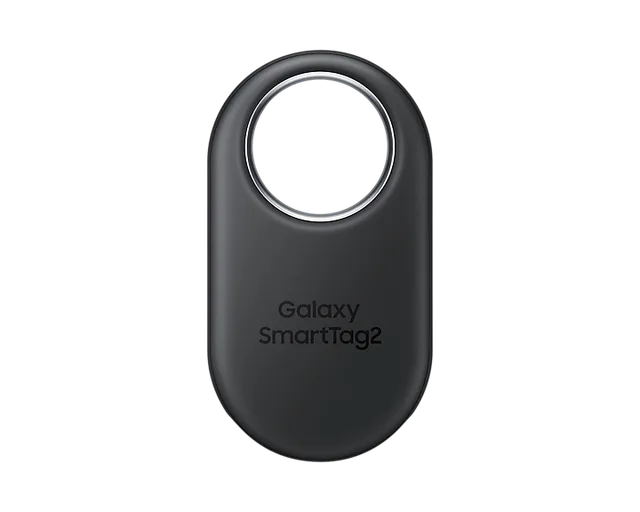
This is the pick if your phone is a Samsung Galaxy, and only if it is a Samsung Galaxy. The SmartTag2 reports through the Galaxy Find Network, formerly SmartThings Find, which is crowdsourced from nearby Samsung Galaxy phones. That network is the strongest option an Android traveler can tap, because Galaxy phones are common in airports worldwide. Android Authority tested a stack of Android trackers and landed on one sentence: for Android there is “one choice and one choice only,” the Galaxy SmartTag2. It scored 7.4 out of 10 against the AirTag’s 8.7 in their testing.
The specs are the best in this group. It uses a replaceable CR2032 coin battery rated around 500 days in normal mode and up to 700 days in power-saving mode, so you change it about once every year and a half. It adds Ultra-Wideband for arrow-guided close-range finding on UWB-capable Galaxy phones running Android 11 or later. Bluetooth range is up to 120 meters in the open, and it is IP67 water resistant. It costs $29.99 for one, or $99.99 for a four-pack.
The honest negative is the ecosystem wall. The SmartTag2 works only with a Samsung Galaxy phone. Drop it in your bag and hand a Pixel or a OnePlus, and you cannot set it up or see it on a map. The network also thins out where Galaxy phones are scarce. One Samsung Community traveler reported quick updates in Canada and a 10-to-15-second delay at a Japanese airport, but the tag went silent on the tarmac and did not report again until the luggage reached the carousel, because no Samsung phones were nearby. That is the pattern to expect off the beaten path.
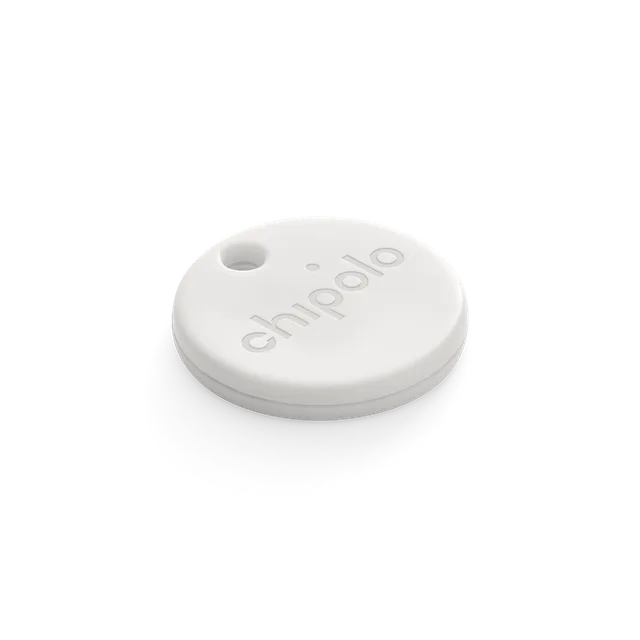
This is the pick for every Android phone that is not a Samsung Galaxy. The Chipolo ONE Point reports through Google’s Find My Device network, now branded Find Hub, which draws on over a billion Android phones worldwide. On paper that is the largest crowd of any Android network. In practice it is younger and patchier than the Apple network, and I get to that below. The ONE Point was one of the launch trackers when Google opened the network in 2024.
The hardware is a fit for a bag. It uses a replaceable CR2032 battery rated up to one year, and it has a 120-decibel speaker, which is the loudest close-range alarm in this group when you are hunting a bag in the same room. It attaches to a zipper or clips inside a compartment. It runs around $28 at list and drops to about $15 during sales. It needs an Android 9 or later phone with Google Play Services. It does not work with an iPhone at all.
The honest negative is the network’s history. When Google launched Find My Device in April 2024, it defaulted to reporting only in “high-traffic areas” as a privacy measure, which left trackers effectively silent in normal locations. 9to5Google told readers to switch the setting to “all areas” by hand just to make trackers usable. Google says the network is now four times faster than at launch, and by early 2025 reviewers found it “seems to actually work now.” It still lags in remote areas, and locating a tag needs two Android devices in the loop, so treat it as capable in busy terminals and weak on an empty apron.
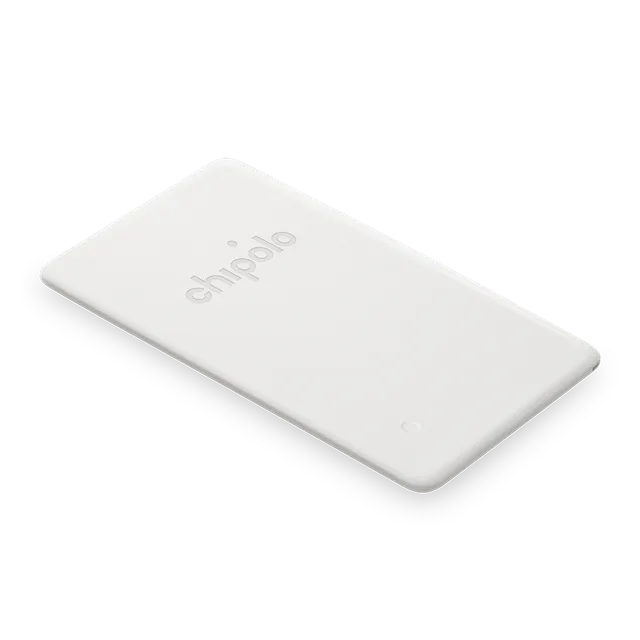
The CARD Point is the same Google Find My Device network in a flat card that fits a wallet, a passport sleeve, or the document pocket of a bag. It measures 2.4 millimeters thick, so it slides where a coin-cell tracker will not. It costs around $35.
The tradeoff is the battery. The CARD Point uses a sealed battery rated up to two years, and you cannot replace it. When it dies, the tag is done, and Chipolo steers you to a discounted replacement through its recycling program. That is worse for the environment and your wallet than the swappable coin cell in the ONE Point. Buy the CARD only if you specifically need the card shape for a wallet or passport. For a suitcase, the cheaper ONE Point with the year-long replaceable battery is the better call.
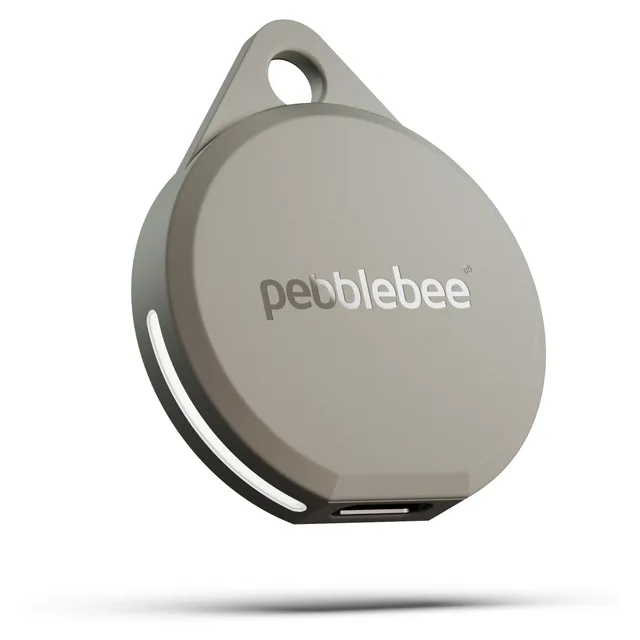
The Pebblebee Clip is the pick if you refuse to deal with coin batteries. It charges over USB-C and runs up to about a year per charge, so you top it up like a pair of earbuds instead of prying open a case for a CR2032. It costs $34.99. Its Bluetooth reaches roughly 500 feet in the open, and the housing is water resistant for a bag exterior.
Its network story has one useful wrinkle. The universal Clip pairs with Google Find My Device on Android or Apple Find My on iOS, one network at a time, so it survives a switch between phone platforms in a way the Samsung and Chipolo tags do not. On Android it rides the same Google Find My Device network as the Chipolo Point, which means it inherits the same patchiness in remote areas that I flagged above. The rechargeable battery is the reason to pick it over the Chipolo ONE Point. The identical network is the reason it is not a stronger locator than the Chipolo, only a more convenient one to keep charged.
The Tile Mate is the tracker I would steer most Android travelers away from, and the reason is the network. Tile runs its own crowdfinding network that depends on people actively running the Tile or Life360 app, so it is far smaller than the billion-plus phones behind Google’s network or Apple’s 2.5-billion-device network. Worse for Android users, Life360 has declined to join Google’s Find My Device network, which keeps Tile boxed inside its own weaker ecosystem instead of the broad Android base. In a packed terminal Tile can report. Outside a major city, reviewers see very infrequent updates.
The Tile Mate costs around $25 with a sealed battery rated up to three years. The catch is the subscription. Key features sit behind Tile Premium at $29.99 per year, including left-behind Smart Alerts, unlimited location sharing, and 30-day location history. Item-loss reimbursement needs the pricier Premium Protect tier at $59.99 per year. There is also trust baggage: Life360, Tile’s owner, was reported to have sold precise user location data to brokers before the Tile acquisition, though it now says it does not sell personally identifiable location data. Between the weaker network and the annual fee, the Chipolo ONE Point at a lower price and no subscription beats it for most non-Samsung Android travelers. I have no manufacturer product image for the Tile Mate, so there is none shown here.
Why not an AirTag
An AirTag would be the easy answer, and on Android it is a non-answer. There is no Android app for AirTag, so you cannot pair one or see it on a map from an Android phone. Its billion-device network is real and it is the best of any tracker, but it is locked to Apple. If you are reading this on an Android phone, an AirTag is off the table. If you actually carry an iPhone and landed here by mistake, read the AirTag vs Tile for travel breakdown instead, because your answer is different.
Be blunt with yourself about the ceiling here. No Android tracker yet matches the AirTag-on-iPhone experience. The Google network improved four times over since 2024 but still goes quiet in remote spots. The Samsung network is strong only where Galaxy phones are dense. Buy the right Android tracker for your phone, then keep your expectations at “it usually reports in busy places,” not “it always finds my bag anywhere.”
The decision
If your phone is a Samsung Galaxy, buy the Galaxy SmartTag2. It rides the densest Android network you can reach and adds UWB close-range finding, for $29.99, as long as you stay in reasonably Samsung-dense regions.
If your phone is any other Android, buy the Chipolo ONE Point. It uses Google’s billion-phone Find My Device network, has a replaceable year-long battery and a 120-decibel speaker, and runs about $28 with no subscription.
If you hate coin batteries, buy the Pebblebee Clip instead. Same Google network as the Chipolo, but it recharges over USB-C, for $34.99.
If you need a wallet or passport shape, buy the Chipolo CARD Point. Same Google network in a 2.4-millimeter card, for around $35, with the downside of a sealed two-year battery.
Skip the Tile Mate for luggage. Its network is the weakest here and it gates left-behind alerts behind a $29.99-per-year subscription.
If you fly often into low-Samsung, low-density regions, keep your expectations low. No current Android tracker gives you the AirTag-on-iPhone experience, so treat any of these as a busy-terminal tool, not a guarantee.
The best packing cubes, ranked by what actually breaks: zippers, mesh, and compression. The pick, the price, and who should skip each set.
Verdict: For most travelers, the Eagle Creek Pack-It Reveal Cube Set is the pick, because the mesh windows let you find things without unpacking and the lifetime warranty covers the one part that fails, the zipper. If you are trying to fit ten days into a carry-on, skip the mesh sets and buy a compression cube instead.
Noise cancelling headphones for long flights, ranked by how they kill engine drone over 10+ hours. The pick, the price, and who should skip each pair.
Verdict: For most long-haul flyers, the Bose QuietComfort Ultra Headphones are the pick, because they mute engine drone as well as anything and stay comfortable past hour eight. If you sleep on your side against the window, skip every over-ear pair here and use earbuds.
The best eSIM for Europe, ranked by price per GB, country coverage, and real throttling limits. The pick, the price, and who should skip each one.
Verdict: For most trips across several European countries, Nomad's Europe regional plan is the pick, because 10 GB for 30 days costs $23 and works in 35 countries on one eSIM. If you burn through more than a few GB a day and never want to think about a data cap, skip the metered plans and buy Holafly unlimited instead, at $73.90 for 30 days.