ESIM for International Travel: How to Choose
Compare eSIM coverage, data plans, prices, activation, and limits to choose an eSIM that fits your international trip.
Verdict: For most travelers, the Timekettle W4 Pro ($449) is the only earbud that makes two-way conversation genuinely hands-free — one earbud per person, 0.2-second latency, no tapping required. Budget travelers who just need to get through airports and markets will do fine with the ANFIER M3 ($89.99), which handles 144 languages online and 8 offline for a fraction of the price.
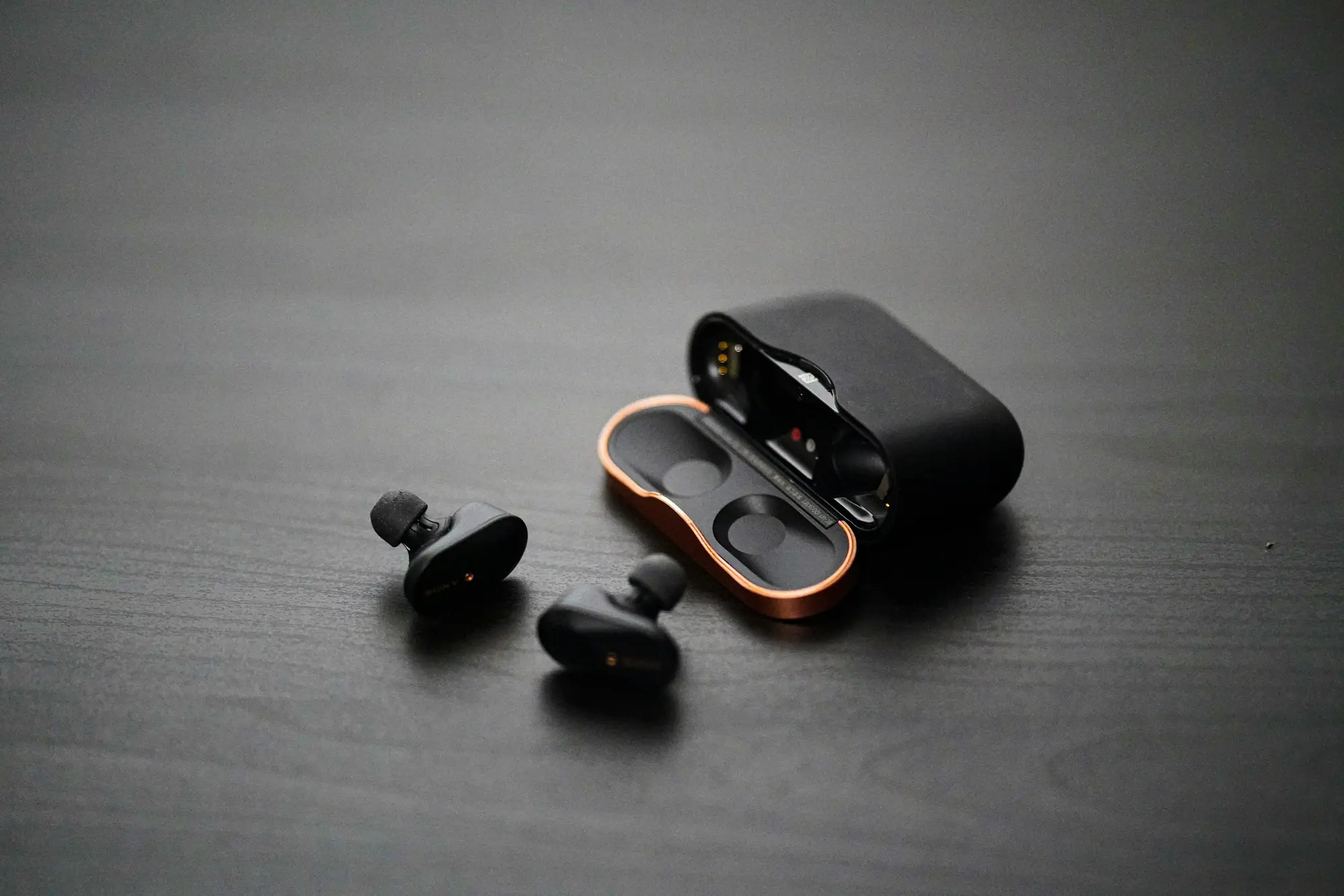
The promise of translation earbuds is straightforward: put them in, speak your language, hear the other person’s words translated back in real time. No fumbling with a phone screen, no holding a device up to someone’s face. In practice, how close each pair gets to that promise depends entirely on latency, accuracy, and whether the thing works when your data signal drops.
This guide covers what to actually look for, which pairs are worth the money in 2026, and the honest answer on whether these replace knowing a few words of the local language.
Some links in this article may be affiliate links. We only recommend products we would genuinely use ourselves.
Three things separate a useful translation earbud from a frustrating one:
Latency. Anything under one second feels like a natural conversation pause. Anything over 1.5 seconds turns every exchange into a stilted back-and-forth that draws attention and kills the mood. Premium dedicated devices hit 0.2 to 0.5 seconds. Earbuds that bolt translation onto audio hardware (like standard ANC earbuds with a translation app) typically run closer to 1 to 2 seconds.
Offline support. Wi-Fi and data abroad are not guaranteed. If your translation earbuds only work online, they become very expensive earphones the moment you step off a tour bus into a rural area. Look for a minimum of 8 offline languages, with the best budget options reaching 16 and dedicated devices supporting offline packs for the languages you actually travel to.
Mode of use. There are two fundamentally different conversation setups. In “one device, one person” mode, you hold or wear one earbud and your conversation partner speaks into the device while you hear the translation — useful for asking directions. In “one-on-one mode,” each person wears one earbud and speaks naturally while the other hears the translation. The second mode is what actually lets you have a real conversation. Not all earbuds support it.
Price: $449 | Languages: 40 (93 accents) | Latency: ~0.2 seconds | Offline: Yes
The W4 Pro is the only pair here designed from the ground up for two-way conversation. Its One-on-One Mode lets each person wear one earbud and speak naturally. You say something in English; your conversation partner hears it in Mandarin (or Spanish, French, Japanese, and 37 more). They respond; you hear the translation. No tapping. No holding a device. No waiting for turn-taking cues.
At 0.2-second latency, the W4 Pro is the fastest dedicated translator on the market — fast enough that the delay disappears into normal conversational pacing. It supports 40 languages across 93 regional accents, which matters when the difference between Mexican Spanish and Argentine Spanish affects comprehension. Offline translation is available, so the earbuds work in areas without signal.
The open-ear design means you hear ambient sound, which some travelers prefer (you can still hear traffic, people calling your name, announcements) and others find distracting. Battery life is 6 hours per charge.
The price is the honest barrier. $449 is what you pay for earbuds that work like the ads say they will. If you are doing serious business travel or spending months in a country where you speak none of the language, the W4 Pro pays for itself quickly. If you are doing a two-week vacation and will use translation for menus and hotel check-in, there are better uses for that money below.
Price: $230 | Languages: 144 online, 16 offline | Latency: <0.5 seconds | Accuracy: 98%
The A8 is the choice if you want to leave your phone in your bag. It operates as a standalone device with a 2-inch touchscreen, its own connectivity, and ChatGPT integration for more nuanced translation. At 144 languages online and 16 offline, it covers more languages than almost any other option here.
The 98% accuracy claim is among the highest in the category, and the offline 16-language pack is genuinely useful: it includes Spanish, French, German, Japanese, Chinese, Korean, and others that cover the majority of popular travel destinations.
The tradeoff is form factor. The A8 is bulkier than standard earbuds, and navigating a touchscreen while trying to have a conversation adds friction. The $230 price positions it between budget options and the Timekettle. For a traveler who wants phone independence but cannot justify the W4 Pro price, it is a reasonable middle option.
Price: $89.99 | Languages: 144 online, 8 offline | Latency: ~1 second | Accuracy: 97%
The M3 punches above its price. At $89.99, it supports 144 online languages, 8 offline languages (Spanish, French, Chinese, Japanese, Korean, German, Arabic, Russian — all high-traffic travel languages), 5 translation modes including photo translation, and doubles as regular music earbuds. No subscription fee.
The one-second latency is noticeable in a flowing conversation — there is a beat of silence before the translation plays. In practice, for asking for directions, ordering food, or navigating a hotel check-in, that pause is manageable. Where it falls apart is longer back-and-forth exchanges where the rhythm of conversation matters.
Photo translation is a useful addition: point the camera at a menu or a sign, and the text comes back translated. Not all earbuds in this price range include it.
For students, occasional travelers, and anyone testing whether translation earbuds fit their travel style before committing to a dedicated device, the M3 is the sensible entry point.
Price: $229 | Languages: 40+ | Latency: ~1 second | Accuracy: 93%
If you already own or are buying Pixel Buds Pro 2 for their audio and ANC quality, the translation integration is a useful bonus. Google Translate is baked in natively — no third-party app, no account setup, no subscription. The microphone quality is excellent, which helps in the noisy environments where translation earbuds are most tested.
The limits are real. Translation requires a Pixel phone for the full feature set. There is no offline translation. Accuracy at 93% is serviceable for common phrases and straightforward requests, but it drops on technical vocabulary and regional dialects. Latency around 1 second means conversations have a rhythm, not a flow.
For an Android-native traveler who uses these earbuds daily and wants translation as one tool among many, the Pixel Buds Pro 2 make sense. For someone buying earbuds specifically to translate, the dedicated options above do it better.
Price: $249 | Languages: Limited (expanding) | Latency: Variable
Apple added Live Translation to AirPods Pro 3 as part of iOS 18, and it works — but it is still maturing. Coverage as of mid-2026 is more limited than dedicated translators, accuracy in real-world testing is inconsistent on less common languages, and the turnaround is slower than the Timekettle or dedicated devices. The feature is primarily designed as an accessibility tool (for hearing) with translation added.
If you own AirPods Pro 3 for their excellent ANC and battery life, run Live Translation when you need it — it is useful for common travel languages. Do not buy them as a translation device. Buy them as the best ANC earbuds for flights (which they are) and treat translation as a secondary feature.
| Earbud | Price | Languages (online/offline) | Latency | Best for |
|---|---|---|---|---|
| Timekettle W4 Pro | $449 | 40 / Yes | 0.2s | Two-way conversation |
| Wooask A8 | $230 | 144 / 16 | <0.5s | Phone-free travel |
| ANFIER M3 | $89.99 | 144 / 8 | ~1s | Budget travelers |
| Google Pixel Buds Pro 2 | $229 | 40+ / No | ~1s | Android daily drivers |
| Apple AirPods Pro 3 | $249 | Limited | Variable | iPhone ANC + translation bonus |
They work best in calm, predictable situations: hotel check-in, restaurants, guided tours, one-on-one conversations in quiet spaces. They work worse in crowded markets, noisy transport hubs, or anywhere with background noise that the microphones pick up and the algorithms have to sort through.
They do not replace knowing a few words. “Hello,” “thank you,” “where is the bathroom,” and “how much” in the local language will always land better than pulling out an earbud and asking someone to wait while you translate. Translation earbuds handle the harder conversations: navigating a local doctor’s office, negotiating at a market, understanding a landlord’s lease terms.
The traveler who benefits most is the one going somewhere for a month or more, working or staying in local accommodation, and regularly needing to communicate beyond tourist-phrase depth. For a week-long vacation where most of the interaction is with English-speaking hospitality staff, a translation app on your phone does the same job for free.
If the dedicated price ($199–$449) is hard to justify, the ANFIER M3 at $89.99 handles the practical cases — menus, directions, hotel logistics — without a subscription, and covers 8 offline languages for the moments your data drops.
Compare eSIM coverage, data plans, prices, activation, and limits to choose an eSIM that fits your international trip.
Six offline maps apps compared for travel: Organic Maps, OsmAnd, HERE WeGo, Google Maps, Maps.me, and Gaia GPS. Which one belongs on your phone before you fly.
Verdict: For most travelers, Organic Maps is the app to install first: free, no ads, no tracking, and accurate to within 5 metres on foot. Add HERE WeGo if you are doing a road trip in Europe or the US. Add OsmAnd if you are hiking or cycling off-road. Google Maps offline is a decent backup but not a primary tool.
The best eSIM for Switzerland, ranked by price per GB and network coverage. Switzerland is not in the EU, so a Europe plan can leave you offline. The picks.
Verdict: For a city-and-train trip through Switzerland, Nomad is the pick, because 10 GB for 30 days is $20.50 and it rides the Salt and Sunrise networks that cover the routes tourists actually take. If you are heading into the high Alps and want data that does not quit in a valley, buy Holafly instead, whose plans can ride Swisscom, the strongest mountain network, at $50.50 for 15 days of unlimited data.