ESIM for International Travel: How to Choose
Compare eSIM coverage, data plans, prices, activation, and limits to choose an eSIM that fits your international trip.
Verdict: For a city-and-train trip through Switzerland, Nomad is the pick, because 10 GB for 30 days is $20.50 and it rides the Salt and Sunrise networks that cover the routes tourists actually take. If you are heading into the high Alps and want data that does not quit in a valley, buy Holafly instead, whose plans can ride Swisscom, the strongest mountain network, at $50.50 for 15 days of unlimited data.

For most trips through Switzerland, the Nomad Switzerland eSIM is the one to buy, because 10 GB for 30 days is $20.50 and it connects to the Salt and Sunrise networks that cover the cities, lakes, and rail lines where tourists spend their time. If your itinerary climbs into the high Alps and you cannot afford to drop signal in a valley, buy Holafly instead, because its plans can ride Swisscom, the strongest mountain network in the country, at $50.50 for 15 days of unlimited data.
Here is the one thing that separates a Switzerland eSIM from a Europe eSIM, and it trips up more travelers than any price difference: Switzerland is not in the EU or the EEA. EU roaming rules do not apply, and a surprising number of “Europe” regional plans quietly leave Switzerland off the country list even while they cover France, Germany, Italy, and Austria. The good news is that all the major regional plans below do include Switzerland, but the rule stands: check that Switzerland is named on the plan before you pay, or you can land in Zurich with an eSIM that will not connect. Prices and data limits here were pulled from each provider’s live listing on August 18, 2026, because eSIM plans change often. Confirm the current number before you buy.
Some links in this article are affiliate links. If you buy through them, we earn a small commission at no extra cost to you. We only link to products we would actually recommend.
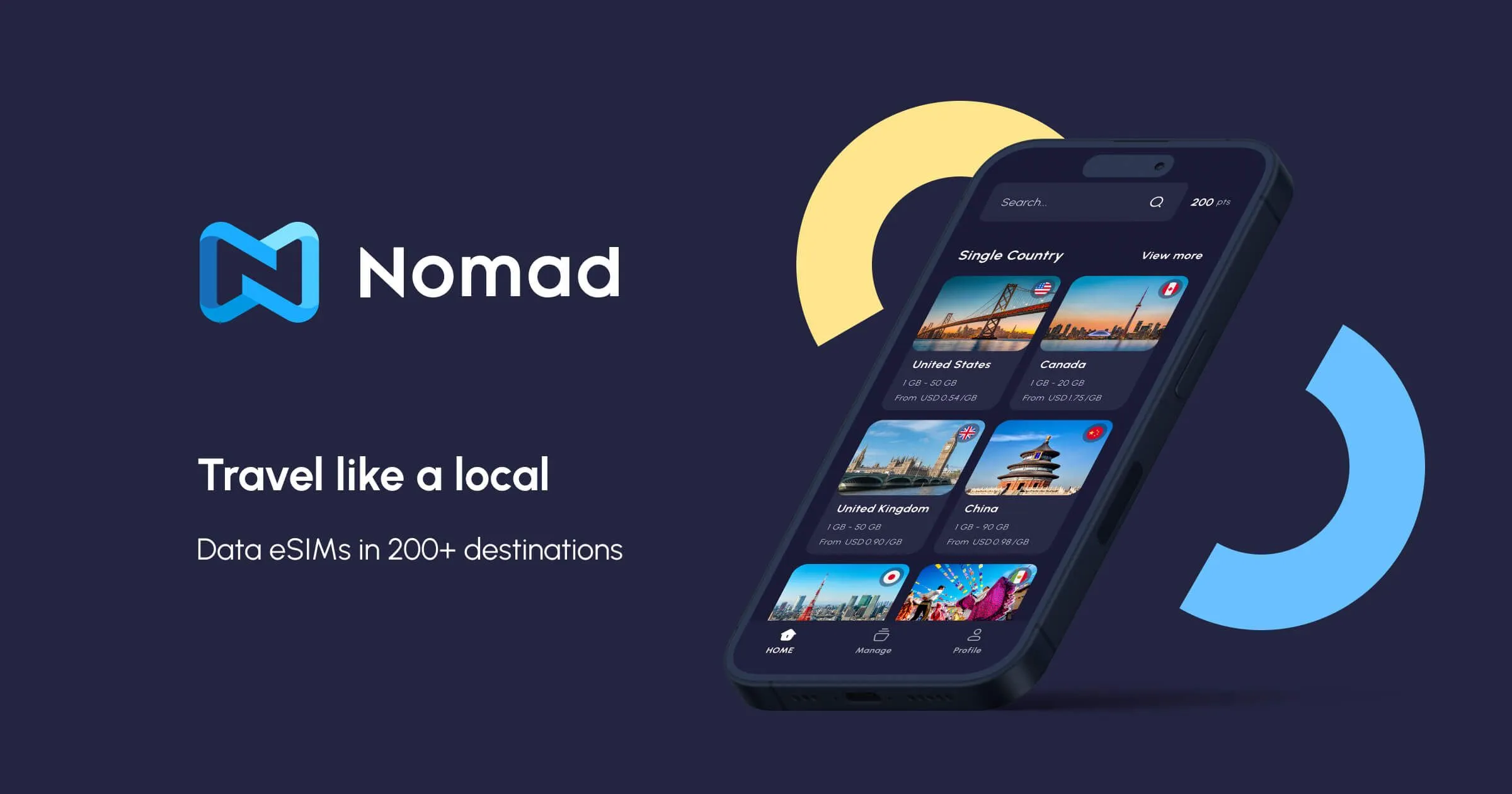
Photo: Nomad
Nomad wins on price per GB for a normal Switzerland trip. Its single-country Switzerland plans size up cleanly: 1 GB for 7 days is $4.50, 3 GB for 30 days is $9, 5 GB is $12.50, and 10 GB for 30 days is $20.50 — the cheapest 10 GB of any provider here. There is even a 20 GB plan at $25 if you stream. It connects to the Salt and Sunrise networks, both of which give solid coverage across Swiss cities, the lakeside towns, and the main rail corridors, which is where most visitors actually are.
The honest negative is the Alps. Salt and Sunrise are strong nationally, but Swisscom has the edge in the highest and most remote mountain terrain, and Nomad does not ride Swisscom. For a Geneva-Lucerne-Interlaken trip that stays in towns and on trains, this does not matter. If your plan is to be standing on a remote ridge above 2,500 meters, weigh the mountain-coverage picks below. Nomad’s “unlimited” plans also cap full speed at 2 GB per day before dropping to about 1 Mbps, so a heavy streamer is better served by a metered 20 GB block.

Photo: Holafly
Holafly is the pick when coverage matters more than price, and in the Alps it does. Its Switzerland plans can connect to Swisscom, Salt, and Sunrise, and Swisscom is the network with the best rural and high-mountain reach — the one you want when you are hiking the Jungfrau region or standing at a cable-car station where the tourist-route networks thin out. Holafly sells unlimited-data plans by duration: 3 days is $11.90, 7 days is $27.50, 15 days is $50.50, and 30 days is $73.90. If you never want to watch a data counter while you are chasing signal up a mountain, this removes that worry.
There are two honest negatives. First, “unlimited” is fair-use, not truly uncapped, and Holafly is data-only: it gives you no phone number for calls or SMS, so it cannot receive a bank verification text. Second, its hotspot is capped at 1 GB per day, so it is a weak choice for tethering a laptop. And at $50.50 for 15 days it costs far more than Nomad’s metered plans, so it only earns its price if you genuinely need the mountain coverage or the no-counter convenience.

Photo: Airalo
Airalo is the safe default, and it is the one to buy if Switzerland is part of a multi-country Europe trip rather than a standalone. Its single-country Switzerland plans run on Pilatus Mobile and price competitively: 1 GB for 3 days is $4, 5 GB for 30 days is $14, and 10 GB for 30 days is $23. But Airalo’s real edge is its Eurolink regional plan, which covers 42 European countries including Switzerland, so a Switzerland-France-Italy route stays on one eSIM — 10 GB for 30 days is $31 on Eurolink. Travelers on the Rick Steves forum repeatedly name Airalo for exactly this kind of multi-country trip, with one noting they had “used it on my last four trips, including in the three countries you mention.”
The honest negative is that Airalo is pricier per GB than Nomad for a Switzerland-only trip, and its single-country network, Pilatus Mobile, does not have Swisscom’s mountain edge. Its “unlimited” plans also cap at 3 GB per day of full speed. Buy Airalo for the regional coverage when your trip crosses borders, not as the cheapest way to get data in Switzerland alone.
Saily, built by the NordVPN team, sells single-country Switzerland plans that undercut on the small sizes — 1 GB for 7 days is $3.99, the cheapest entry point here — with 10 GB for 30 days at $22.99 and a 20 GB plan at $36.99. Its edge is on the unlimited-style tiers: Saily gives 5 GB per day at full speed before throttling, the most generous daily headroom of any provider in this comparison, versus 3 GB on Airalo and 2 GB on Nomad. It bundles an ad blocker and virtual-location tools too. Like Holafly, it is data-only with no phone number.
The word to distrust across every provider is “unlimited.” On these plans it means full speed up to a daily threshold, then a slowdown to roughly 1 Mbps for the rest of that day. Nobody here sells truly uncapped high-speed data for Switzerland. Read the daily number, not the word “unlimited,” when you compare, and note which Swiss network the plan rides, because in the mountains that matters more than the data cap.
Every eSIM here is data-only, which means none of them can receive an SMS. If your bank sends a one-time passcode by text, a data-only Switzerland eSIM cannot receive it. The fix is dual SIM: keep your home line active for calls and texts while routing data through the travel eSIM. We walk through that setup, and how to check whether your phone even supports it, in our guide to eSIM vs physical SIM for travel. If your trip runs beyond Switzerland into the wider EU, our best eSIM for Europe roundup covers the regional-plan math for country-hopping.
Compare eSIM coverage, data plans, prices, activation, and limits to choose an eSIM that fits your international trip.
Six offline maps apps compared for travel: Organic Maps, OsmAnd, HERE WeGo, Google Maps, Maps.me, and Gaia GPS. Which one belongs on your phone before you fly.
Verdict: For most travelers, Organic Maps is the app to install first: free, no ads, no tracking, and accurate to within 5 metres on foot. Add HERE WeGo if you are doing a road trip in Europe or the US. Add OsmAnd if you are hiking or cycling off-road. Google Maps offline is a decent backup but not a primary tool.
Real-time translation earbuds tested and ranked for travel: latency, offline support, accuracy, and price. Find the right pair for how you actually travel.
Verdict: For most travelers, the Timekettle W4 Pro ($449) is the only earbud that makes two-way conversation genuinely hands-free — one earbud per person, 0.2-second latency, no tapping required. Budget travelers who just need to get through airports and markets will do fine with the ANFIER M3 ($89.99), which handles 144 languages online and 8 offline for a fraction of the price.