Best Waterproof Phone Case for Travel: 3 Picks for Beach, Boats, and Rain
Verdict:The Pelican Marine Floating Pouch ($20) is the right pick for most travelers — IP68 rated, floats if dropped in water, fits any phone up to 6.7", and includes a detachable lanyard. For budget travelers who just want splash protection, the JOTO Universal Pouch covers the basics at under $13. Snorkelers and underwater photographers need a hard waterproof case, not a pouch.
A phone dropped in the ocean is not a travel story. A phone that survived a kayak capsize because you had the right case is. The difference between those two outcomes is usually a $15 to $20 purchase made before the trip.
The problem is that waterproof pouches and cases vary wildly in what they actually protect against. A splash-proof sleeve and a certified IPX8 pouch are both sold under the term “waterproof.” One handles rain and a brief dunk; the other can go a meter underwater for 30 minutes. Knowing which one matches your trip matters before you test it in actual water.
Some links in this article may be affiliate links. We only recommend gear we would actually travel with.
The short answer
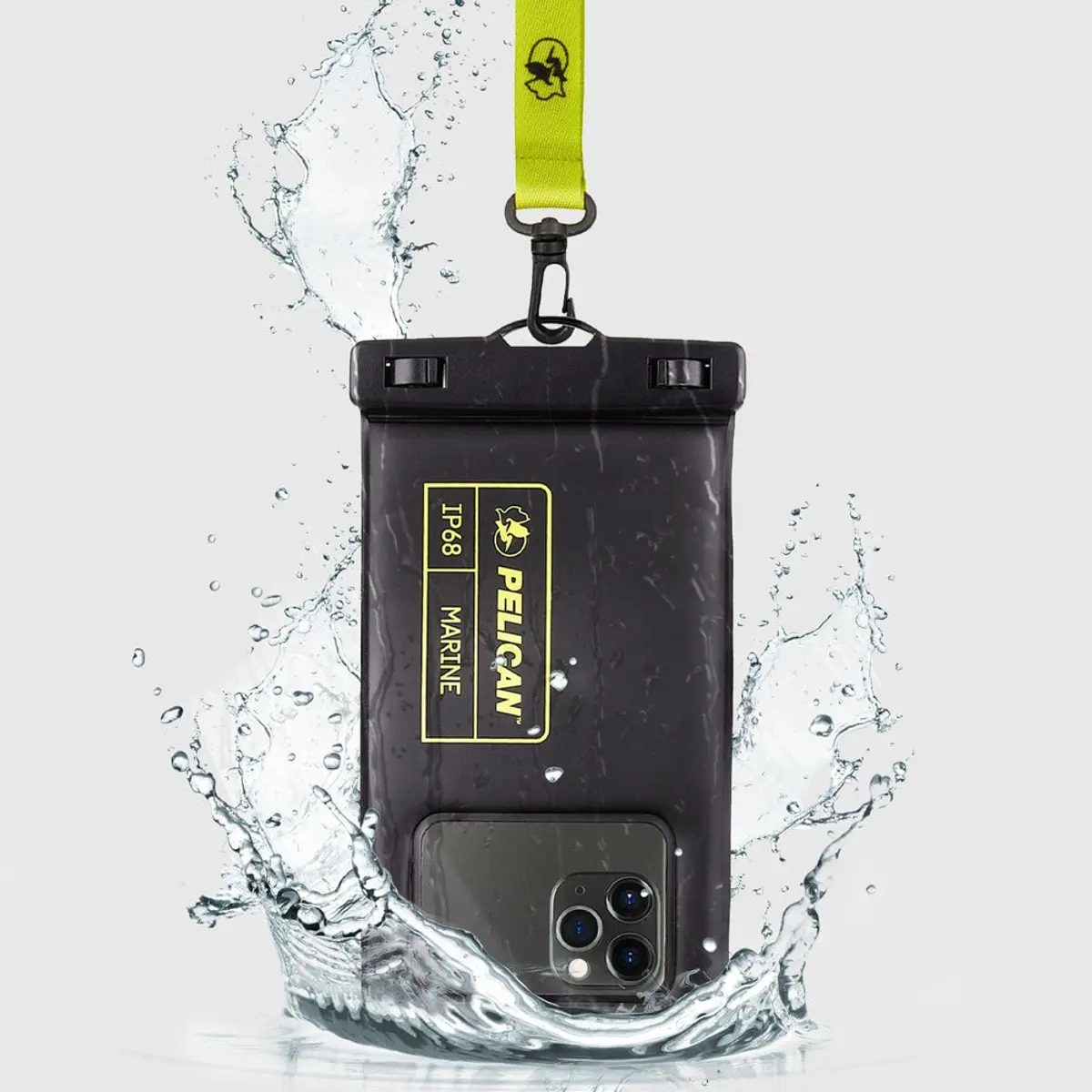
The Pelican Marine Floating Pouch ($20) is the pick for most travelers. It is IP68 certified, fits any smartphone with touchscreen access through the clear window, and — critically — it floats. If you are near boats, rivers, or open water, that float feature alone earns its price.
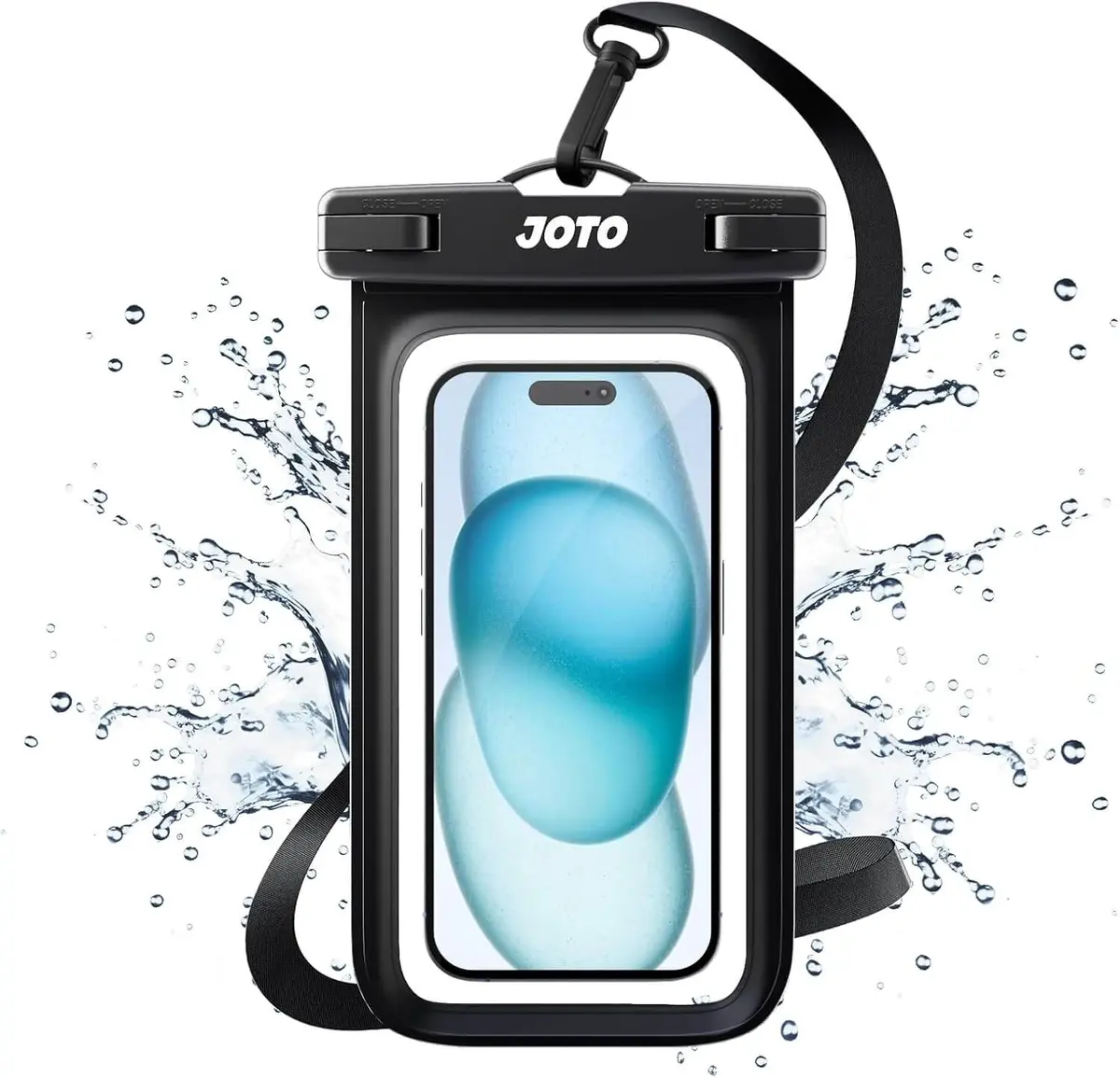
The JOTO Universal Waterproof Pouch ($12.99) is the right call when you want a lower price and only need rain and splash coverage. At IPX8 up to 100 feet, it is technically the stronger waterproof rating, but it does not float.
For snorkeling or diving with your phone — meaning the phone needs to stay underwater with you, not just survive a drop — you need a hard waterproof case designed for your specific phone model, not a pouch. Pouches are for protection; hard cases are for active underwater use.
The three scenarios, matched to the right product
Pelican Marine Floating Pouch
JOTO Universal Pouch
Hard Waterproof Case
Price
$20
$12.99
$30–$80+
Waterproof rating
IP68 (1m / 30 min)
IPX8 (100 feet)
IPX8 or higher
Floats
Yes
No
No
Universal fit
Yes (up to 6.7”)
Yes (up to 7”)
Phone-specific
Touchscreen use
Yes (through window)
Yes (through window)
Full access
Lanyard included
Yes, detachable
Yes
Usually no
Best for
Open water, boats, rain
Rain, pools, splashes
Snorkeling, diving
Pelican Marine Floating Pouch — best for open water and travel
$20 at case-mate.com
The feature that separates the Pelican Marine from every other pouch in its price range is the built-in air cushions. If this pouch slips off a kayak or off the side of a boat, it floats. Retrieving a phone from a lake or river bottom without that feature is significantly harder than retrieving it from the surface.
The IP68 rating certifies submersion up to 1 meter for 30 minutes — more than enough for rain, dock splashing, and accidental drops near water. The clear window works with touchscreens, which means you can use navigation, take photos, and check messages without removing the phone. A detachable lanyard lets you wear it around your neck during kayaking or water activities.
Dimensions are 8.27 × 4.53 × 0.53 inches. It fits most smartphones including current iPhone and Galaxy models. It does not fit tablet-sized devices.
One limitation: the touchscreen window works for standard interactions but is not optimized for underwater photography. If you want to take photos from below the surface, a hard case gives you cleaner results.
Sources for this section (verify, then delete or keep as inline link):
JOTO Universal Waterproof Pouch — best budget pick
$12.99 at procase.com
The JOTO Universal is the right choice when you want reliable protection without paying more for the float feature. IPX8 rated to 100 feet, it offers technically deeper submersion rating than the Pelican, but it sinks if dropped in open water.
The pouch fits smartphones up to 7 inches diagonally (most current flagship phones fit, including Max/Plus/Ultra models). A snap-and-lock closure creates the seal — straightforward to use and to verify is closed properly. Clear windows on both front and back allow touchscreen access and rear-camera photos.
At $12.99, it is frequently available in 2-packs for the same or slightly more, which makes sense if you are traveling with a partner or want a backup.
The main trade-offs versus the Pelican: no floating cushions, simpler lanyard, and slightly less polished build. For hotel pool days, rainy hikes, or boat tours where you would be attached to the pouch the whole time, those trade-offs do not matter much.
Sources for this section (verify, then delete or keep as inline link):
Hard waterproof cases — when you need more than a pouch
If your trip includes snorkeling, diving, or any activity where your phone is actively submerged while you are using it, a pouch is the wrong tool. Pouches protect a phone that accidentally enters water; hard cases protect a phone you are deliberately using in water.
Hard cases are model-specific (meaning an iPhone 16 case will not fit a Galaxy S25), cost more ($30 to $80 or higher for dive-rated versions), and do not include a lanyard. They allow full button and camera access since the case wraps the phone directly rather than enclosing it in a bag.
Brands to look at: Catalyst, Lifeproof (though distribution has changed since their 2024 ownership change), and OtterBox for higher-end options. Verify current IP ratings directly with the manufacturer before purchasing — waterproof ratings in this category can change across product generations.
What waterproof ratings actually mean for travel
IP68 is the certification you want for any waterproof product that will actually contact water. The “6” means it is dustproof. The “8” means the manufacturer has tested it for continuous submersion at a defined depth and duration (which varies by brand — always check the spec, since a generic “IP68” on a $5 product does not equal a tested $20 Pelican).
IPX8 drops the dust protection rating (the X replaces the dust digit) but certifies the same water submersion level.
Splash-resistant / water-resistant is not a certification. It means the product handled light rain or a mist in a non-standardized test. Do not trust splash-resistant products near open water.
Float vs. sink. Standard pouches sink. The Pelican Marine uses air cushions to create buoyancy. If your activity involves any chance of the pouch leaving your hand over water, floating is not a nice-to-have.
FAQ
Do waterproof phone cases actually work?
Yes, when the IP rating is legitimate and the seal is closed correctly. The most common failure mode is user error — not fully sealing the closure before entering the water. Always do a visual check and a light squeeze before submerging. A certified IPX8 or IP68 pouch properly sealed will handle a 1+ meter drop and extended splash exposure.
What is the best phone case for traveling to a beach?
For a beach trip where your phone will stay with you near the water, the Pelican Marine Floating Pouch is the practical choice — its lanyard keeps it around your neck or on your wrist, and if it slips into the surf, it floats. For a trip where your phone will mostly stay in the bag while you swim, a basic waterproof pouch in a zip pocket works fine.
Can I take photos through a waterproof pouch?
Yes, most pouches with clear front and back windows allow rear camera use. Image quality is slightly reduced compared to shooting without the pouch since you are shooting through a layer of plastic. For casual travel photos, the difference is acceptable. For professional or print-quality photography near water, a hard case that exposes the camera lens directly gives better results.
Is OtterBox waterproof?
OtterBox makes several product lines with different protection levels. The OtterBox Frē is a fully submersible hard case. Standard OtterBox Defender and Commuter cases are not waterproof — they resist drops and debris but are not rated for submersion. Check the specific model’s specs rather than assuming the brand name means waterproof.
Final thoughts: buy for your actual activity
Most travelers need the Pelican Marine Floating Pouch or the JOTO Universal — one for open water near boats and rivers, one for pool days and rain. If your trip includes snorkeling or diving, add a model-specific hard case to that kit. The $20 you spend before the trip will save a phone that costs considerably more to replace mid-journey.
eSIM wins for multi-country trips and modern phones. Physical SIM still beats it for long single-country stays and older devices. Here's how to decide.
Verdict: For most travelers on modern phones doing multi-country or short-stay trips, an eSIM from Airalo or Saily is the right call — it activates before you land and costs $4–$20 for regional coverage. Physical SIM still wins if you're staying in one country for weeks, using an older device, or want calls and texts included in your plan.
The Arzopa A1 is the portable monitor most travelers should buy. Three picks by budget: $79 solo screen to $399 dual-display.
Verdict: The Arzopa A1 ($79.99) is the portable monitor most travelers should start with — 1.6 lbs, USB-C powered, and plug-and-play with any modern laptop. Step up to the ViewSonic VX1655 ($159.99) if you want better build quality and 60W pass-through charging. Remote workers who genuinely need two screens should look at the JSAUX FlipGo Standard.
The Peak Design Travel Tripod packs to the size of a water bottle with a 60-inch max height and 20 lb load capacity. Honest review of aluminum and carbon fiber.
Verdict: The Peak Design Travel Tripod Aluminum ($379.95) is the compact tripod to buy if you want full-size stability in a carry-on-friendly footprint. At 15.4" collapsed and 60" max height, it is the only tripod in its class that genuinely fits in a bag without compromise. The Carbon Fiber version ($599.95) saves 0.63 lbs at a $220 premium — worth it for ultralight backpacking trips, not necessary for most travelers.